
Smart Tech vs. Core Skills: Why Modern Driving Assistance Can’t Replace Driving Fundamentals in Manhattan
Today’s vehicles are engineered with extraordinary safety technology. From real-time radar systems to dual-camera setups, Advanced Driver Assistance Systems (ADAS) are increasingly marketed as the ultimate automotive co-pilots. Modern cars can detect approaching vehicles in neighboring lanes, gently nudge your steering wheel back into alignment, and automatically engage full braking pressure if an obstacle abruptly appears in front of you.
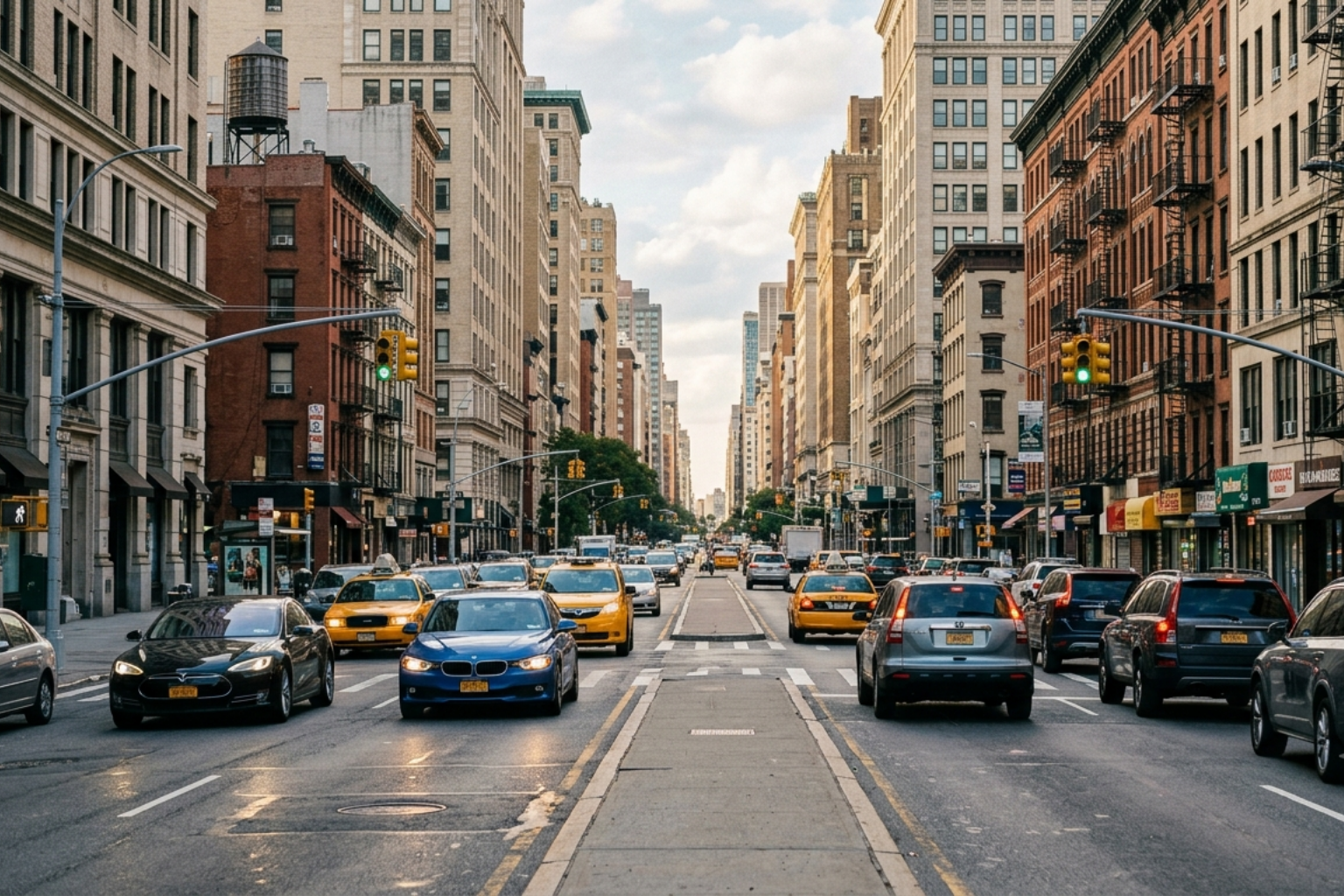
For new drivers navigating the dense, fast-paced grid of New York City—from the residential avenues of the Upper East Side (UES) to the bustling, high-traffic corridors of the Upper West Side (UWS)—these automated safety features sound like the ultimate safety net.
However, at VMARE Driving School, our certified NYC driving instructors emphasize a fundamental truth to all of our students: technology is an assistant, not a replacement for proper driving mechanics. Relying exclusively on dashboard warnings and camera monitors without mastering core driving skills creates dangerous vulnerabilities—both on the street and on your New York State DMV road test. In an unpredictable driving environment like Manhattan, understanding the mechanics, benefits, and severe technical limits of modern driver-assist systems is vital for safe driving.
Understanding Advanced Driver Assistance Systems (ADAS) in NYC
To use modern vehicle technology safely, you must understand how each system operates—and precisely where it struggles when faced with Manhattan’s unique road challenges.
1. Blind Spot Monitoring (BSM)
How it works: Radar sensors housed inside the rear bumper monitor adjacent travel lanes. When another motor vehicle enters your blind spot, an illuminated warning icon lights up in your side mirror or front door pillar.
The NYC Reality & Limitation: BSM systems are calibrated primarily for multi-lane highways and consistent traffic flow. On Manhattan avenues such as 86th Street, Broadway, or 2nd Avenue, delivery cyclists, electric scooter riders, and lane-splitting mopeds move rapidly through tight gaps between vehicles. Blind Spot Monitoring radar often misses narrow two-wheel vehicles or generates false positives near parked cars and metal scaffolding. If a student relies solely on the mirror light without performing a physical chin-to-shoulder check, a dangerous bicycle or pedestrian collision can easily occur.
2. Lane Departure Warning & Lane Keep Assist (LKA)
How it works: Optical camera modules positioned behind the windshield mirror track painted road lines. If your vehicle drifts out of its lane without an active turn signal, the system sounds an audible alert or applies corrective steering torque to re-center the vehicle.
The NYC Reality & Limitation: Streets across the Upper East Side and Upper West Side are subject to constant utility work, temporary traffic cone re-routing, double-parked delivery vans, and faded pavement paint. When lane markings suddenly disappear or shift around a construction zone, Lane Keep Assist can disengage abruptly or mistakenly attempt to steer your vehicle into a double-parked truck or cyclist lane.
3. Automatic Emergency Braking (AEB) & Forward Collision Warning
How it works: Front-facing radar and stereo cameras evaluate the distance and closing speed of objects directly ahead. If a collision is imminent and the driver fails to react instantly, AEB automatically applies maximum braking force.
The NYC Reality & Limitation: AEB is designed to prevent devastating high-speed rear-end collisions. However, in Manhattan’s stop-and-go grid, an unexpected automated hard stop can trigger a severe rear-end collision from the tailgating taxi or commercial truck behind you. Furthermore, automated sensors cannot read pedestrian eye contact or body language at crowded intersections near Central Park or Lincoln Center.
Why Student Drivers Must Master Fundamental Skills
Whether you are preparing for your official New York State road test or learning to navigate city streets with confidence, core driving fundamentals remain the foundation of safe driving.
1. NYS DMV Road Test Standards
New York State driving examiners evaluate human observation, active vehicle control, and spatial awareness—not your car's digital dashboard. During your NYS road test, examiners will dock points or instantly fail candidates who rely on backup cameras rather than physically turning their heads, or who fail to perform full, dynamic shoulder checks before moving into a new lane or pulling away from the curb. In fact, key assistance features are routinely turned off during driving exams.
2. The Physical Shoulder Check ("Over-the-Shoulder Glance")
No digital sensor can match human peripheral vision. Throughout Manhattan, protected bike lanes run parallel to vehicle lanes. Before executing any turn across a bike lane, performing a swift, physical 90-degree shoulder check is the only foolproof way to detect oncoming cyclists and electric scooter riders hidden in your blind spot.
3. Precision Mirror Adjustment & Spatial Awareness
Proper side-mirror positioning eliminates up to 80% of lateral blind spots. At VMARE Driving School, we train students in the BGE (Blind Spot-Glare Elimination) mirror positioning technique. Combined with correct seating posture and disciplined scanning habits, students develop an intuitive sense of vehicle dimensions that functions in any vehicle—with or without electronic sensors.
4. Anticipatory Urban Driving
Automated safety technology reacts to immediate danger, whereas master drivers anticipate danger before it occurs. At VMARE, our behind-the-wheel instruction teaches students to look through parked vehicle windows, scan under car frames for pedestrian feet, read traffic flow three cars ahead, and smoothly control acceleration and braking without relying on automated intervention.
Master Manhattan Driving with VMARE Driving School
Whether you are a beginner taking your very first lesson, an adult learner in the Upper East Side or Upper West Side looking to build highway and city confidence, or a student preparing to clear your NYC road test on the first attempt, VMARE Driving School delivers structured, professional, and patient instruction tailored to New York City driving.
Our expert instructors teach you how to use modern vehicle safety technology as a helpful secondary backup while developing complete mastery over manual vehicle control, parallel parking in tight spaces, defensive city driving, and smooth navigation.
Ready to Become a Confident, Skilled NYC Driver?
Don't rely on luck or electronic sensors—build lifelong driving skills with Manhattan’s trusted driving instruction team.
👉 Book Your Professional Driving Lessons with VMARE Driving School Today!
Serving Upper East Side (UES), Upper West Side (UWS), Midtown Manhattan, Harlem, Washington Heights, and all NYC Boroughs with flexible scheduling and official NYS road test preparation packages.
