
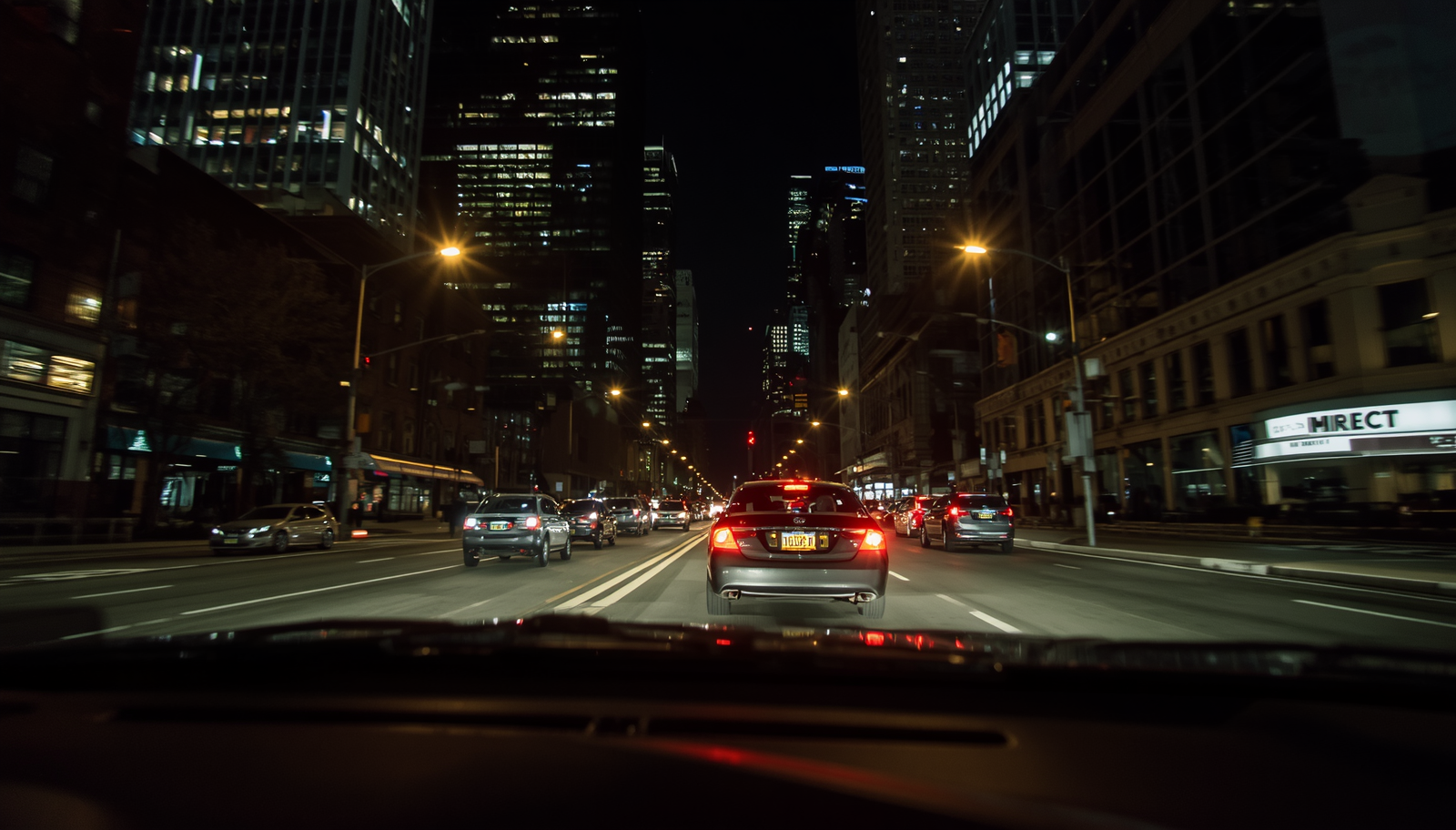
Night Driving in NYC: Glare, Pedestrians, and Judging Distance
Driving in New York City is a challenge even on a sunny afternoon. But once the sun dips below the skyline, the city transforms. The familiar grids of Manhattan, the Upper East Side (UES), and the Upper West Side (UWS) become a labyrinth of neon lights, deep shadows, and unpredictable variables. Across the East River in Long Island City (LIC) and the wider expanses of Queens, the challenges shift from dense traffic to high-speed arteries and complex intersections.
At VMARE Driving School, we believe that night driving isn’t just about turning on your headlights; it’s about a total shift in perception and defensive strategy. In this guide, we dive deep into the three biggest hazards of NYC night driving: blinding glare, invisible pedestrians, and the difficulty of judging distance in the dark.
1. The Battle Against Glare: Manhattan to Queens
New York City is never truly dark. From the LED billboards of Times Square to the streetlights of the UWS, light is everywhere. However, this artificial light creates a significant problem: glare. Glare occurs when light is so bright that it interferes with your vision, often leaving "ghost images" on your retina.
The Oncoming Headlight Struggle: When driving on two-way streets in Queens or narrow avenues in the UES, oncoming traffic can be blinding. Modern HID and LED headlights are brighter than ever. To combat this, never look directly into the lights; instead, shift your gaze down and toward the right edge of your lane.
Internal and Mirror Glare: Reflections from your own dashboard or the headlights of the car behind you can be distracting. Ensure your rearview mirror is flipped to the "night" setting to dim reflections. Keep your dashboard lights at a lower intensity so your pupils don't constrict, making the road ahead harder to see.
2. Invisible Pedestrians in Dark Clothing
New York is a walking city. In neighborhoods like Long Island City (LIC) or the Upper West Side, foot traffic remains high well into the night. One of the most dangerous factors for NYC drivers is the "invisible pedestrian"—someone crossing the street while wearing dark clothing.
The Contrast Problem: Our eyes detect movement through contrast. A person in a black coat against dark asphalt is nearly impossible to see until they are within 50 to 100 feet. At 30 mph, you need much more distance than that to stop safely.
Mid-Block Crossings: In NYC, pedestrians don't always wait for the light. On long blocks in Manhattan, people often step out between parked cars. Always assume there is someone about to step out, reduce your speed, and keep your foot "covering" the brake in high-pedestrian zones.
3. Judging Distance and Speed in the Dark
Humans rely heavily on depth perception to drive safely. During the day, we use landmarks and clear shadows to judge distance. At night, most of those visual cues vanish.
The "Tail Light" Illusion: When you see two red lights ahead, it’s difficult to tell if that car is 100 feet or 300 feet away. This is particularly dangerous on the Queensboro Bridge or the FDR Drive. Increase your following distance to at least 4-6 seconds at night.
Intersection Geometry: Turning left across traffic in the UES or UWS is significantly harder at night. Oncoming headlights can make a car look further away than it actually is. If you aren't 100% sure of the gap, wait.
VMARE’s Expert Night Driving Tips
Keep it Clean: A dirty windshield scatters light and increases glare. Clean your windows inside and out.
Check Your Lights: Regularly verify that your headlights, tail lights, and turn signals are working. In Manhattan, being invisible from the back is just as dangerous as not seeing forward.
Eye Health: Ensure your glasses prescription is up to date and ask for anti-reflective coating.
Preparation is Key
Night driving in New York City requires a unique blend of patience, technical skill, and heightened awareness. Whether you are navigating the tight turns of LIC, the busy avenues of the Upper East Side, or the residential streets of Queens, VMARE Driving School is here to help you gain confidence.
Our professional instructors, including Vince and Ron, understand the specific nuances of NYC's road tests and real-world driving.
Ready to get behind the wheel?
From Manhattan to Queens, VMARE is the top-rated choice for new drivers. Join the hundreds of students who have passed their NYC road test with us!
