
What to Do When There’s No “Where” to Go: Move Over Law in NYC
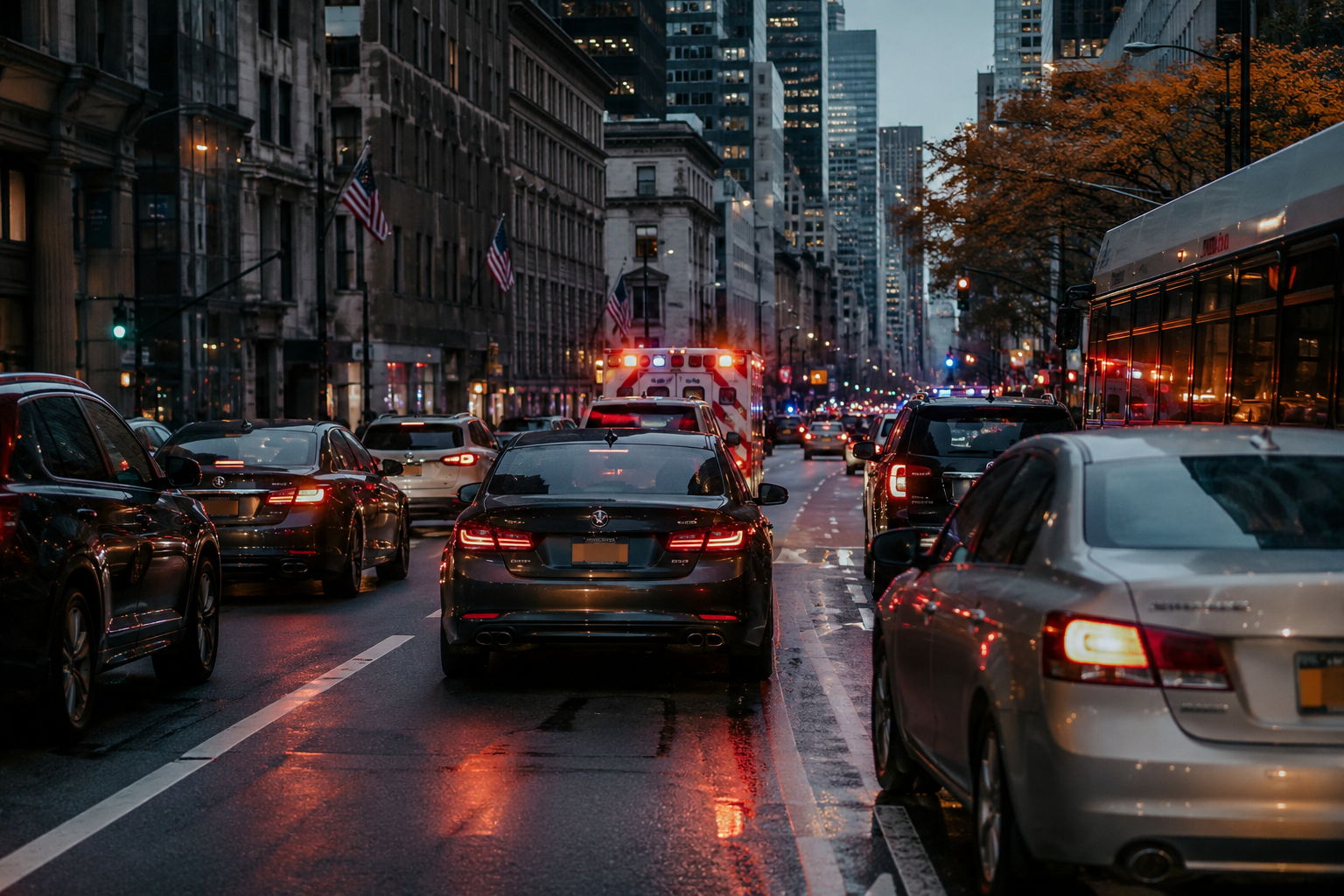
What to Do When There’s No “Where” to Go: Emergency Vehicles and the Move Over Law in NYC
Driving in New York City means dealing with tight lanes, double-parked cars, bike lanes, buses, and constant traffic pressure. Now add an approaching emergency vehicle—sirens blaring, lights flashing—and suddenly you’re expected to “move over” when there’s barely any space to begin with.
So what are you actually supposed to do when there’s no clear place to go?
This guide breaks down New York’s Move Over Law, what driving examiners expect, and the safest way to respond in real NYC conditions. If you’re preparing for your road test—or just want to drive smarter—this is essential knowledge.
What Is the Move Over Law in NYC?
New York’s Move Over Law requires drivers to:
Move over to the next lane when an emergency or hazard vehicle is stopped on the roadside
If moving over is not possible, slow down significantly and proceed with caution
This applies to:
Police vehicles
Fire trucks
Ambulances
Tow trucks
Construction and maintenance vehicles
In NYC, however, the challenge isn’t understanding the rule—it’s applying it in streets that weren’t designed for flexibility.
The Reality: NYC Streets Don’t Always Allow You to Move Over
Let’s be practical. In areas like Manhattan, Queens, or Brooklyn, you’ll often face:
One-lane roads with no shoulder
Double-parked vehicles blocking clearance
Bike lanes limiting lateral movement
Dense traffic with no gaps
So what happens when you physically cannot move over?
👉 This is where judgment—not just rules—comes in.
What to Do When There’s No Space to Move Over
Here’s the correct, examiner-approved approach:
1. Slow Down Immediately
The law clearly states: if you can’t move over, you must reduce speed.
Ease off the gas
Cover your brake
Be ready to stop
This shows awareness and control—two things examiners look for.
2. Do NOT Panic-Swerve
A common mistake is forcing a move:
Swerving into a bike lane
Cutting into another lane without clearance
Mounting the curb
❌ These actions can cause accidents and will fail you on a road test.
✔️ Controlled, predictable driving is always safer than aggressive compliance.
3. Create Space Gradually
Even in tight conditions, space can often be created:
Let the car ahead move forward before advancing
Leave a buffer between you and the next vehicle
Slightly adjust your position within your lane
Small adjustments matter. You’re signaling intent without creating risk.
4. Stop if Necessary
If the emergency vehicle is directly behind you and cannot pass:
Safely come to a stop
Stay alert and ready to move once space opens
In NYC, stopping briefly is often the safest and most realistic option.
5. Watch for Direction of Approach
Not all emergency vehicles are behind you.
If approaching from the opposite direction, stay in your lane and slow down
If approaching at an intersection, do not block it—clear it first if safe
Situational awareness is critical.
What Driving Examiners Expect During Your Road Test
At VMARE Driving School, we train students specifically for NYC conditions—not textbook scenarios.
During your road test, examiners are not expecting perfection. They are evaluating:
Decision-making under pressure
Situational awareness
Vehicle control
Risk management
If you encounter an emergency vehicle scenario, they want to see that you:
✔ Recognize the situation quickly
✔ Avoid unsafe or forced movements
✔ Reduce speed appropriately
✔ Maintain composure
👉 Even if you don’t fully “move over,” demonstrating safe judgment can still result in a pass.
Common Mistakes NYC Drivers Make
Avoid these high-risk errors:
Freezing completely and not reacting
Speeding up to “get out of the way”
Cutting off other drivers to change lanes
Ignoring the situation altogether
Each of these shows poor awareness and can lead to penalties—or worse, accidents.
Pro Tips from VMARE Driving Instructors
Our instructors work with real NYC traffic daily. Here’s what they emphasize:
✔ Always Scan Ahead
Don’t wait until the siren is behind you. Look 2–3 blocks ahead when possible.
✔ Control Over Compliance
Following the law doesn’t mean risking safety. Controlled driving comes first.
✔ Use Your Mirrors Constantly
Emergency vehicles move fast. Early detection gives you more options.
✔ Stay Predictable
Other drivers need to understand your movement. Sudden actions create confusion.
Why This Matters Beyond the Road Test
Understanding how to handle emergency vehicles isn’t just about passing—it’s about responsibility.
Every second counts for:
Ambulances transporting critical patients
Fire trucks responding to emergencies
Police managing urgent situations
Your ability to respond correctly can directly impact lives.
Learn Real NYC Driving—Not Just Theory
At VMARE Driving School, we don’t just teach rules—we train you for real-world driving in New York City.
Our lessons include:
Live traffic scenarios
Emergency response awareness
Road test preparation strategies
Defensive driving techniques
Whether you’re a first-time driver or need a refresher before your test, we make sure you’re fully prepared.
Book Your Driving Lessons Today
Don’t wait until you’re in a high-pressure situation to figure out what to do.
Train with instructors who understand NYC streets and teach you how to handle them with confidence.
Get road test-ready with real, practical training
Drive smarter, safer, and with full control
Mastering situations like this is what separates a nervous driver from a confident one. In NYC, that difference matters every single day.
👉 Book your driving lessons with VMARE Driving School today
