
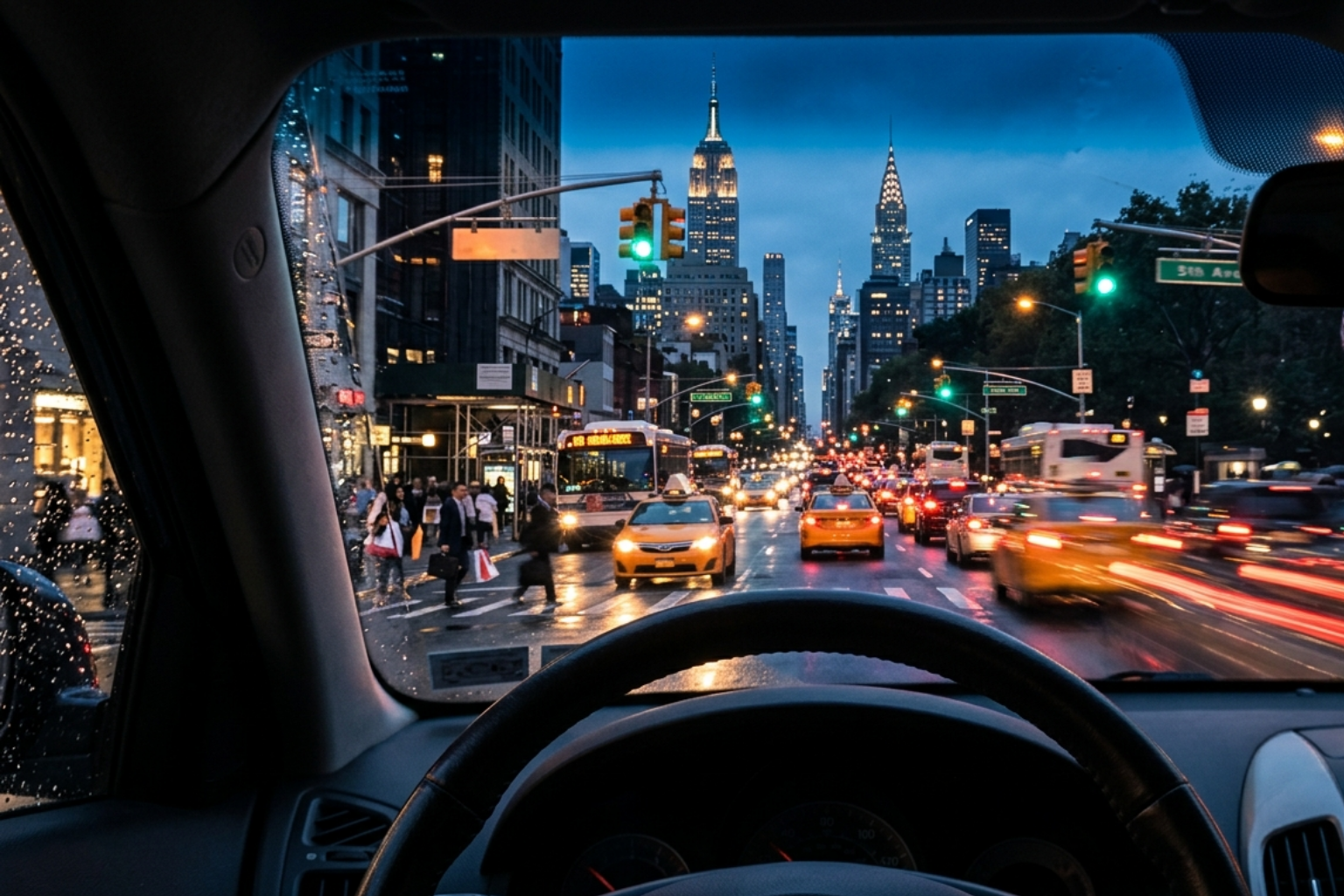
Defensive Driving for NYC Beginners: “Look Ahead” Scanning Habits You Can Train
Driving in New York City can feel like jumping straight into a video game on the hardest difficulty level. Between the yellow cabs darting across lanes in Manhattan, delivery cyclists weaving through traffic on the Upper West Side, and crowded intersections near the Queensboro Bridge, a beginner driver’s attention is pulled in a dozen directions at once.
When you are new behind the wheel, the natural instinct is to stare directly at the bumper of the car right in front of you. While that keeps you from rear-ending that single vehicle, it leaves you completely blind to everything else happening on the road.
At VMARE Driving School, we teach our students that mastering New York City streets isn't about having faster reflexes; it’s about training your eyes to see hazards before they happen. The foundation of true defensive driving is developing a proactive "Look Ahead" scanning habit. By learning how to scan the road like a seasoned pro, you can transform city driving from a stressful guessing game into a predictable, confident experience.
What is the "Look Ahead" Scanning Habit?
Most beginner drivers operate with a field of vision that extends only 2 to 3 seconds ahead of their bumper. In a high-density environment like NYC, that short distance gives you zero time to react if a pedestrian steps off a curb or a delivery truck suddenly drops its hazard lights.
The "Look Ahead" rule—often taught as the 15-second eye lead time—dictates that your eyes should consistently scan the road 12 to 15 seconds into the future.
On an open highway, 15 seconds ahead is about a quarter of a mile.
On busy city streets like Broadway or Queens Boulevard, 15 seconds means looking one to two blocks ahead.
Instead of watching the car directly in front of you, you look through their windshield or around their vehicle to see what is causing them to brake in the first place.
3 Core Scanning Habits You Can Train Today
Shifting your visual focus away from the immediate front of your car takes intentional practice. When you train with VMARE Driving School across Manhattan and Queens, our DMV-certified instructors break down eye-level scanning into three actionable habits.
1. The Multi-Tiered Scan (High, Middle, Low)
Your eyes should never stay locked on one target for more than a couple of seconds. Instead, practice moving your gaze in a continuous loop:
The High Scan (Looking Far Ahead): Look one to two blocks down the road. Are traffic lights turning yellow? Is an emergency vehicle flashing its lights? Are brake lights tapping a block away?
The Middle Scan (The Ground-Level Environment): Scan the sidewalks and curbs. Look for pedestrians waiting at crosswalks, rideshare vehicles pulling over, or double-parked delivery vans forcing cars to merge.
The Low Scan (Immediate Path): Briefly check your lane positioning, the pavement quality (potholes can cause cars ahead to swerve wildly), and the immediate distance between your Toyota Corolla and the vehicle ahead.
2. Predict Intersection Chaos Before You Arrive
Intersections are where the vast majority of urban collisions occur. As you approach an intersection on the East Side or West Side of Manhattan, don’t just look at your green light. Scan for the variables that can disrupt your path:
"Stale" Green Lights: If a light has been green for a block or two before you reach it, anticipate that it will turn yellow by the time you arrive. Cover your brake early.
Pedestrian Countdowns: Look at the pedestrian flashing hand signals. If the countdown timer is at 2 seconds, the traffic light is about to change.
Turning Vehicles: Look for oncoming vehicles waiting to make a left turn across your lane, or vehicles ahead signaling a right turn into a crowded crosswalk.
3. The 5-Second Mirror Check
Defensive driving isn't just about what's in front of you; it’s about maintaining a 360-degree bubble of awareness. Train yourself to glance at your rearview and side mirrors every 5 to 8 seconds, and always before you tap your brakes or change lanes. Knowing if a city bus or an aggressive driver is riding your tailgate completely changes how you manage your speed and stopping distances.
Why Urban Scanning is Different in NYC Neighborhoods
A generic defensive driving guide won't prepare you for the unique infrastructure of New York City. Visual scanning needs to adapt based on exactly where you are driving:
NYC Service RegionPrimary Scanning Hazards to TargetDriving StrategyManhattan (Upper East Side / Lenox Hill)Double-parked delivery trucks, pedestrians stepping out between parked cars, tight avenues.Scan through the windows of parked cars to spot pedestrian feet or moving shadows before they step into the street.Manhattan (Upper West Side / Morningside)Protected bike lanes, turning vehicles cutting off cyclists, heavy pedestrian crosswalk traffic near parks.Prioritize deep side-mirror scans and over-the-shoulder blind spot checks before making any right or left turns across bike lanes.Queens (Astoria / Long Island City / Sunnyside)Complex multi-lane intersections (like Northern Blvd), elevated subway pillar shadows, aggressive highway merging.Rapidly shift eyes between overhead lane signs and ground-level pavement markings to ensure you are in the correct lane well in advance.
Overcoming the "Tunnel Vision" of Nervous Drivers
When you feel anxious behind the wheel, your brain suffers from a phenomenon known as tunnel vision. Your muscles tense up, your grip tightens on the steering wheel, and your eyes lock straight ahead onto the closest object.
The best way to break out of tunnel vision is through structural, dual-controlled training. Having a professional instructor beside you means you have a safety net. If you miss a hazard because you are focused on maintaining your lane, your instructor is already scanning the block for you, guiding your eyes with calm verbal cues until scanning becomes your automatic default setting.
Master NYC Streets with VMARE Driving School
You don’t have to learn the hard way. At VMARE Driving School, we specialize in turning nervous beginners into cool, collected, defensive drivers. We provide personalized, one-on-one behind-the-wheel lessons using modern, dual-controlled Toyota Corollas—the exact same car you will use to ace your road test.
Whether you are looking to start from scratch with our Full License Package (which includes the mandatory NY State 5-Hour Pre-Licensing course via Zoom), need an expedited road test appointment in Queens, or want flexible door-to-door pickup across the Upper East Side and Upper West Side to build your highway confidence, we have a package tailored to you.
Don't let the chaos of city traffic keep you on the sidewalk. Master the visual habits that keep you safe, build undeniable confidence, and claim your independence on the road.
Book Your NYC Driving Lessons with VMARE Today!
Have questions or prefer to text? Reach out directly to our team at 917-617-4520 to schedule your first session!
