
Beyond the Required Hours: Mastering NYC Roads with Competency-Based Driving
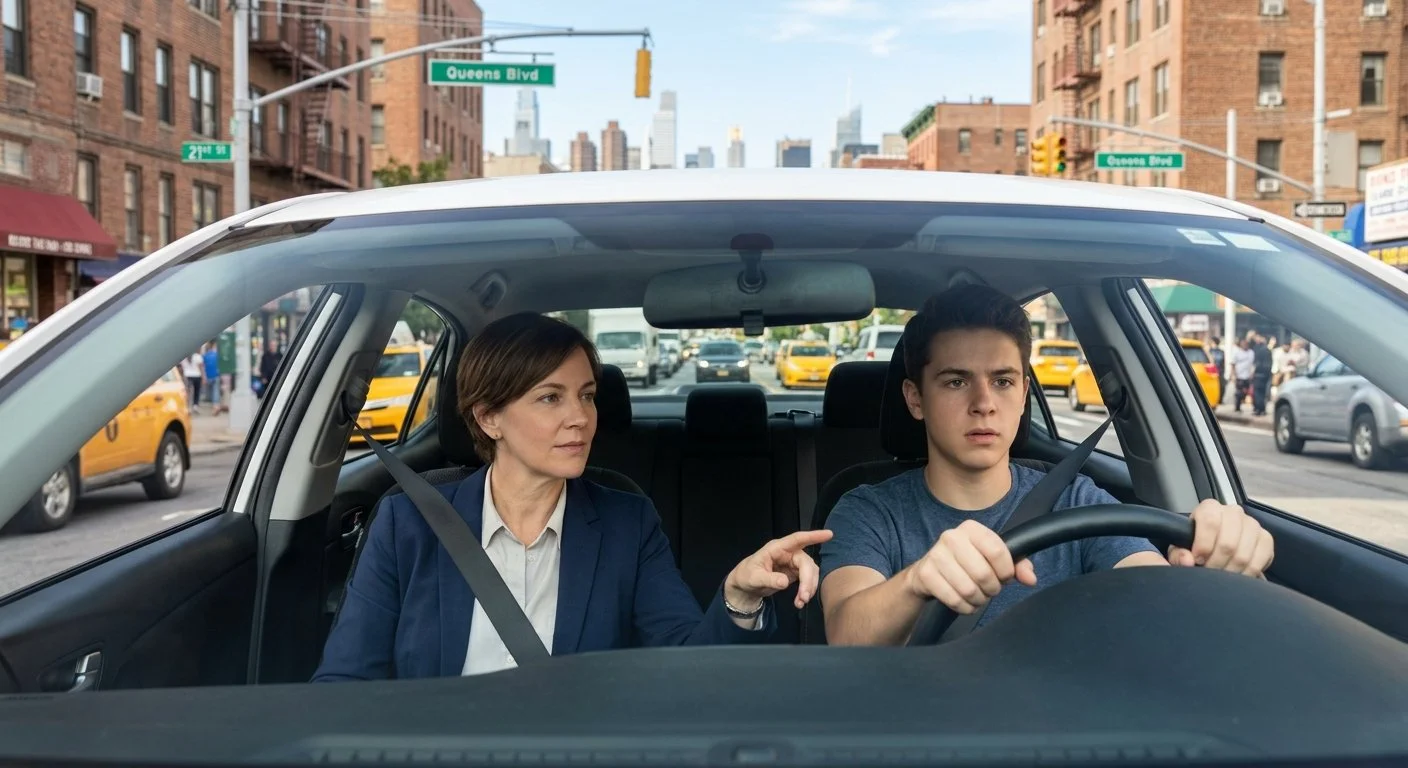
Beyond the Required Hours: Mastering NYC Roads with Competency-Based Driving
When preparing for your New York State road test, it is easy to focus on hitting a single metric: counting down your required driving hours. Whether you are a teen working toward licensing mandates or an adult getting behind the wheel for the first time, logging 50 hours in a logbook can feel like reaching the finish line.
However, sitting behind the wheel for a set number of hours does not automatically translate to real-world driving competence—especially in New York City.
At VMARE Driving School, we teach beyond basic hour-tracking. True road confidence comes from Competency-Based Driver Education (CBDE)—a modern, goal-oriented methodology that focuses on proven skill mastery rather than passive time spent in a car.
What Is Competency-Based Driver Education?
Traditional driving instruction often measures progress by the clock. A standard curriculum might allocate two hours to parallel parking, two hours to highway driving, and call it a day—regardless of whether the student mastered those techniques or remains anxious behind the wheel.
Competency-Based Driver Education flips this model.
Instead of asking, "How many hours did you drive this week?" CBDE asks, "Which specific critical driving skills have you mastered?"
Under a competency-based model:
Instruction is individualized: You progress to new challenges only after demonstrating consistent, safe execution of fundamental skills.
Learning is objective: Every maneuver—from mirror adjustments to parallel parking—is evaluated against clear safety criteria.
Focus shifts to real-world scenario handling: Rather than simply memorizing answers for a test, you build muscle memory and decision-making capabilities.
Why Seat Time Alone Falls Short on NYC Streets
Navigating New York City traffic demands far more than basic steering and pedal control. Driving through Manhattan’s dense neighborhoods or Queens' busy intersections presents unpredictable variables that hour-logging alone cannot prepare you for.
Here is why passive seat time fails to make you a safe NYC driver:
1. Repetition Without Feedback Reinforces Bad Habits
If you log 50 hours driving with a well-meaning family member, you might spend those hours repeating improper hand placement, poor mirror checks, or hesitant braking habits. Hours without professional feedback simply solidify bad mechanics.
2. Quiet Suburbs vs. Complex NYC Corridors
Fifty hours on low-traffic suburban roads will not prepare you for the sudden double-parked delivery trucks, pedestrians stepping off curbs, or aggressive lane changes typical of New York City traffic. Quality of practice always beats quantity.
3. Test Anxiety Stems from Incomplete Skill Mastery
Many prospective drivers experience severe test-day nerves. Most road test anxiety does not come from a lack of driving hours—it comes from underlying uncertainty about specific maneuvers, like reversing in a straight line or judging gaps in oncoming traffic. When skills are mastered to the point of automaticity, test anxiety drops dramatically.
The VMARE Framework: Skill Mastery in Action
At VMARE Driving School, our curriculum is engineered around targeted skill progression. We ensure every student gains proficiency in the foundational pillars of safe NYC driving before moving toward advanced road test prep.
Key Competency Milestones
Vehicle Setup & Ergonomics: Proper seat positioning, target sightlines, and setting mirrors to eliminate side blind spots.
Low-Speed Spatial Control: Mastering 3-point turns, parallel parking, and curb distance judgment without guesswork.
Intersection Navigation: Safely executing left turns across oncoming traffic, reading complex signage, and anticipating pedestrian movement.
Defensive Hazard Perception: Identifying potential hazards 3 to 4 seconds ahead, maintaining safe follow distances, and reacting smoothly under pressure.
By measuring your training against explicit skill checkpoints, you know exactly where you stand and what needs refinement long before test day arrives.
The Benefits of a Skill-First Approach
Focusing on competency delivers distinct advantages over basic hour-tracking:
Faster Skill Acquisition: By addressing precise weaknesses during every lesson, you make rapid, measurable progress without wasted time.
Higher First-Time Pass Rates: Examiner evaluation forms are based on physical competency and rule adherence, not your logbook hours.
Lifetime Safety: Learning to read traffic patterns and manage vehicle dynamics keeps you safe long after you receive your driver's license.
Ready to Master NYC Roads with Confidence?
Whether you are preparing for your first road test or looking to build genuine driving confidence on busy NYC streets, VMARE Driving School provides professional, structured, competency-based instruction tailored to your pace.
We offer patient, expert instruction with flexible scheduling across our primary service areas:
Upper East Side (UES)
Upper West Side (UWS)
Long Island City (LIC)
Queens Neighborhoods
Don't just log hours—master the skills that make you a safer, more confident driver.
