
How Does ‘Don’t Block the Box’ Rule Work in Manhattan?
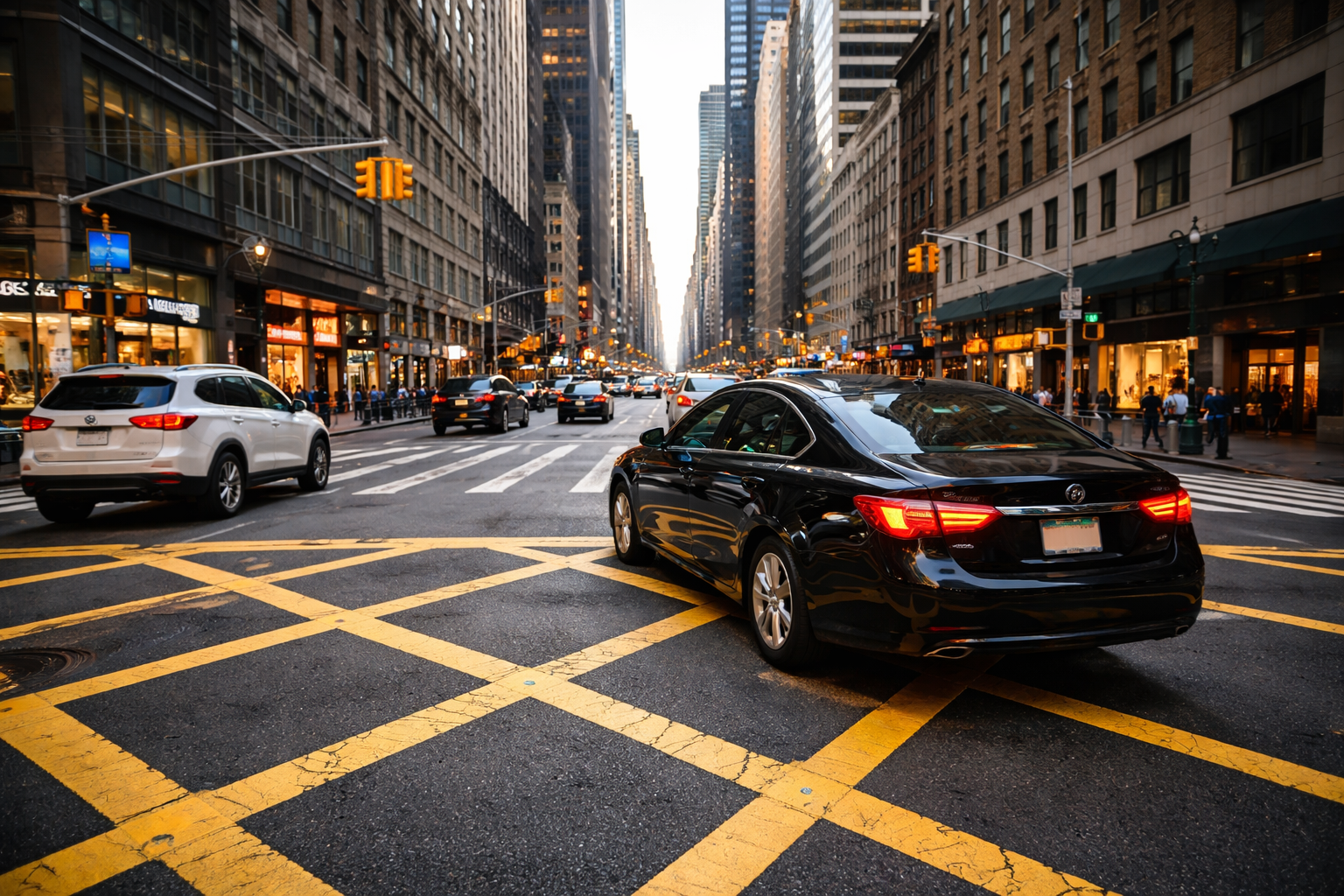
Don’t Block the Box: How Gridlock Rules Actually Work in Manhattan
If you drive anywhere in Manhattan, the East Side, West Side, LIC, or Queens, one traffic rule you must master is “Don’t Block the Box.” It may seem simple, but misunderstanding this rule is one of the fastest ways to create gridlock, earn a ticket, and fail a road test mindset check.
At VMARE Driving School, we teach students how to handle real NYC intersection pressure, especially in busy corridors across Midtown Manhattan, the Upper East Side, Upper West Side, Long Island City (LIC), and Queens Boulevard.
The truth is: you can still break this rule even on a green light. That’s what surprises most new drivers.
In New York City, blocking the box means entering an intersection without enough space to fully clear it on the other side. If traffic stops and your vehicle gets stuck inside the painted crosshatch or intersection space, you are creating spillback that can freeze multiple blocks of traffic. NYC enforcement specifically targets this because it causes cascading congestion throughout Manhattan’s grid.
What “Don’t Block the Box” actually means
The rule is simple:
Never enter the intersection unless you can completely exit it.
That means before moving forward, you must check:
Is there a full car-length of space ahead?
Is the lane beyond the intersection moving?
Will pedestrians be forced around my car?
Is another car trying to merge from the East Side or West Side lane?
If the answer is uncertain, wait behind the stop line.
This matters even more in Manhattan avenues, where one blocked intersection can quickly affect crosstown traffic, buses, bike lanes, and pedestrian crossings.
Busy enforcement corridors historically include Broadway, Canal Street, 3rd Avenue, West 57th Street, and major Queens intersections near LIC and Queens Plaza.
Why drivers get this wrong in Manhattan
Most beginners assume:
“The light is green, so I should go.”
That’s not always true in NYC.
In dense traffic areas like:
East Side near 3rd Ave
West Side Highway approaches
LIC near Queens Plaza
Queens Boulevard
Midtown Manhattan cross streets
the bigger question is space, not signal color.
A green light only gives permission to proceed if the exit path is clear.
This is one of the most important defensive driving habits we coach at VMARE because Manhattan traffic often moves in short bursts, especially during rush hour.
Real Manhattan example
Imagine you are driving southbound in Midtown Manhattan.
The light turns green at Broadway and West 57th Street.
Cars ahead begin moving, so you follow.
But suddenly:
taxi stops
delivery van double parks
pedestrian crossing surge slows turns
lane merge from the West Side backs up
Now your car is trapped in the center of the intersection when the signal changes.
That is blocking the box, and it can stop:
northbound traffic
left turns from side streets
MTA buses
emergency vehicles
pedestrian crosswalk flow
This is exactly how gridlock spreads block by block in Manhattan. (City Limits)
How this affects your road test and real-world driving
Even if your DMV examiner doesn’t specifically call it “blocking the box,” they absolutely evaluate:
judgment
traffic anticipation
patience
intersection control
hazard awareness
If you force your way into a blocked Manhattan or Queens intersection, it shows poor decision-making under pressure.
At VMARE Driving School, our instructors train students on:
Queens road test routes
LIC city traffic
Manhattan avenue timing
East Side / West Side congestion patterns
safe gap judgment
stop-line discipline
These are critical for passing both the test and real NYC driving conditions.
Best strategy to avoid blocking the box
Use this VMARE 3-second rule before entering:
1) Look beyond the intersection
Don’t stare only at the light.
Look through the box to confirm open lane space.
2) Count one full car space
If you don’t clearly see room for your entire vehicle, stay put.
3) Expect sudden Manhattan stops
In Manhattan and LIC, traffic can halt instantly because of:
yellow cabs
buses
pedestrians
delivery trucks
ride-share pickups
double parking
Always assume traffic may stop faster than expected.
Why this matters in Queens and LIC too
Many students think this is only a Manhattan rule, but it matters heavily in:
LIC near Queensboro Bridge exits
Queens Plaza
Northern Boulevard
Roosevelt Avenue
Skillman Avenue
Queens Boulevard
These are common choke points where one bad decision creates traffic waves.
That’s why VMARE emphasizes urban flow driving, not just basic steering and parking.
Final takeaway: smart drivers think ahead
The best NYC drivers are not the fastest.
They are the ones who:
predict traffic patterns
protect intersections
avoid aggressive moves
respect pedestrians
maintain smooth flow
“Don’t Block the Box” is really about thinking one block ahead, especially in Manhattan, East Side, West Side, LIC, and Queens.
Mastering this rule makes you safer, calmer, and far more road-test ready.
Book NYC driving lessons with VMARE today
Want hands-on coaching for Manhattan traffic rules, Queens road test prep, LIC driving confidence, East Side and West Side congestion strategies?
VMARE Driving School helps students master:
NYC gridlock rules
defensive city driving
intersection timing
road test routes
beginner confidence in heavy traffic
👉 Book your driving lessons today and learn how to drive smart in Manhattan and Queens with confidence.
