
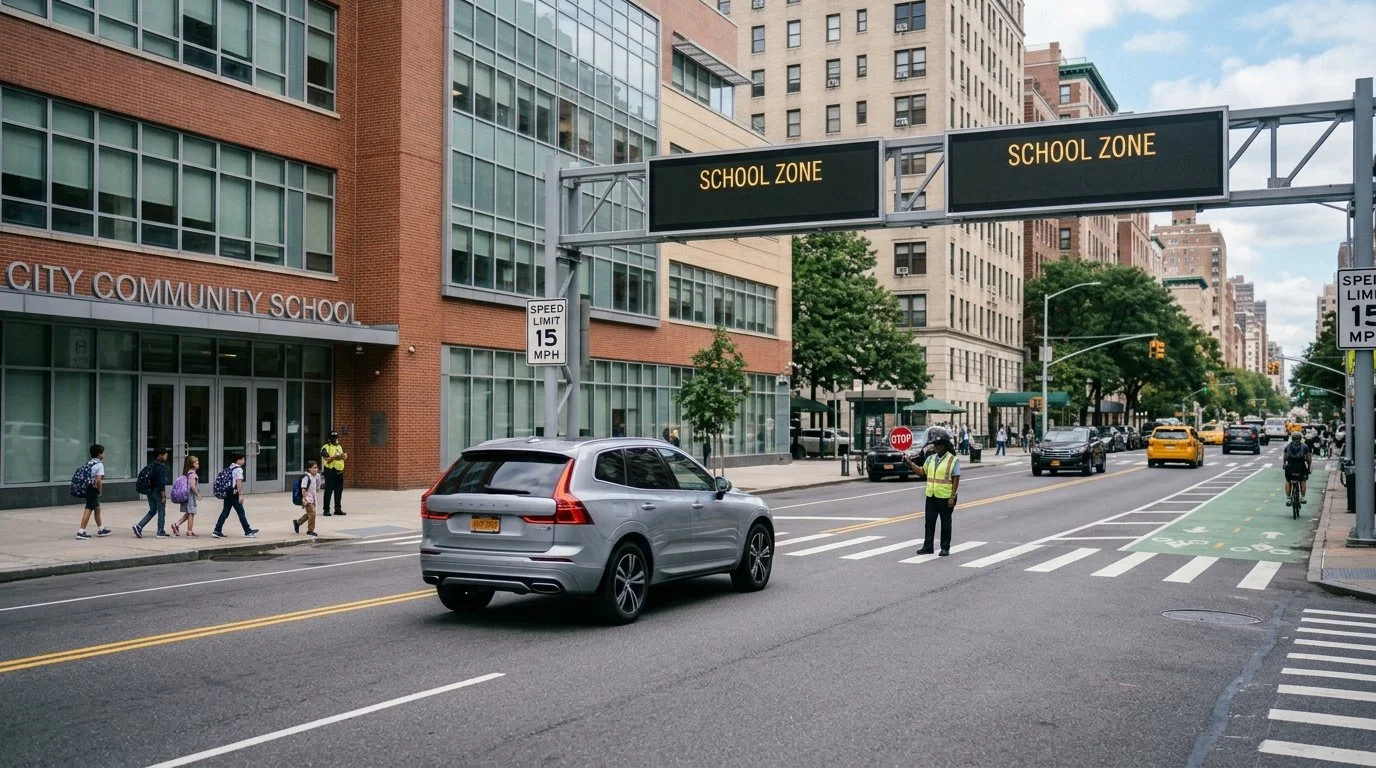
Protecting Vulnerable Road Users: What Every Teen Driver Should Know
Getting behind the wheel for the first time brings an incredible sense of freedom. For new and teen drivers across New York City, earning a driver's license is a major milestone. However, driving down busy urban streets comes with serious responsibility. Beyond navigating traffic, controlling your speed, and reading road signs, your primary job behind the wheel is keeping everyone around you safe.
In a densely populated metropolis like New York, the road belongs to more than just cars and trucks. You share space with millions of people walking, riding bikes, scooting, and commuting daily. These individuals are classified as vulnerable road users (VRUs). Because they lack the protection of a two-ton metal cage, seatbelts, or airbags, vulnerable road users face the greatest risk of injury or death during a collision.
Understanding how to share the road safely with pedestrians, cyclists, and students in school zones is essential for every beginner driver. Here is what every teen driver needs to know to navigate NYC streets safely, protect vulnerable road users, and build lifelong defensive driving habits.
Who Are Vulnerable Road Users?
A vulnerable road user is anyone on or near a roadway who lacks external structural protection. While drivers are shielded by modern vehicle safety features, vulnerable road users rely entirely on situational awareness and driver compliance with traffic laws.
The three primary categories of VRUs you encounter daily include:
Pedestrians: People walking, running, using wheelchairs, pushing strollers, or standing on crosswalks and sidewalks.
Cyclists: People riding bicycles, e-bikes, cargo bikes, and electric scooters in bike lanes or shared traffic lanes.
Children and Students: Younger pedestrians navigating school zones, waiting at bus stops, or stepping off sidewalks unpredictable times.
Because New York City traffic is dynamic and dense, teen drivers must learn to anticipate human error and maintain continuous visual awareness.
Navigating Pedestrian Safety in Dense Neighborhoods
Pedestrians always have the right-of-way at marked and unmarked crosswalks, intersections, and street corners. In crowded corridors throughout Manhattan and Queens, pedestrian traffic can quickly overlap with vehicle lanes.
Essential Rules for Pedestrian Safety
Scan Ahead at Every Intersection: Always reduce your speed when approaching crosswalks, even if your signal is green. Look both ways to spot pedestrians who may be finishing a street crossing or starting to step off the curb.
Never Pass a Stopped Vehicle at a Crosswalk: If a car in front of you or in an adjacent lane slows down or stops at an intersection, do not pass it. The driver ahead may be yielding to a pedestrian you cannot yet see.
Check Blind Spots During Turns: When turning left or right at an intersection, check your side mirrors and look over your shoulder. Pedestrians often have a walking signal that runs parallel to your turning green light.
Yield Completely: Stop behind the limit line at crosswalks to give pedestrians clear sightlines and ample room to cross without feeling threatened.
Sharing the Road with Cyclists and Micromobility Riders
Bicycles and e-bikes are a core element of NYC transportation. Cyclists have the legal right to share the road with motor vehicles, and teen drivers must treat them with the same respect as any full-sized automobile.
How to Drive Safely Near Cyclists
Maintain a Safe Following Distance: Give cyclists plenty of space. Avoid tailgating, as cyclists may need to swerve suddenly to avoid potholes, debris, or opened car doors.
Pass with Caution: When passing a cyclist, allow at least three feet of space between your vehicle and the bike. If traffic or lane width does not allow three feet of clearance, wait patiently until it is safe to pass.
Look Before Opening Car Doors: Practice the "Dutch Reach" when parking along curbs or picking up passengers. Reach for the door handle with your far hand (your right hand when exiting the driver's seat). This naturally turns your body, forcing you to check your side mirror and blind spot for approaching cyclists before opening the door.
Respect Dedicated Bike Lanes: Do not drive, park, or idle in dedicated bike lanes. Crossing a bike lane requires yielding to any incoming cyclist before initiating a turn.
School Zones and Protecting Children
School zones require maximum vigilance. Children do not process risk the same way adults do; they may act unpredictably, chase a ball into the street, or step out from behind parked vehicles without looking.
Critical Safety Protocols for School Zones
Obey Lowered Speed Limits: School zone speed limits are strictly enforced for a reason. Reducing your speed gives you reaction time to stop short if a child steps into the roadway unexpectedly.
Stop for School Buses: When a school bus flashes its red lights and extends its stop arm, traffic in both directions must come to a complete stop. Never attempt to pass a stopped school bus while children are boarding or exiting.
Eliminate All Distractions: Put your phone away, refrain from adjusting your stereo, and keep both hands on the wheel. Distracted driving is a leading cause of collisions involving young pedestrians.
Watch for Hidden Hazards: Double-parked vehicles, delivery trucks, and large vans near school gates obstruct view corridors. Slow down whenever your visibility around parked cars is restricted.
Defensive Driving Tips for New Drivers
Developing defensive driving habits early ensures that safety becomes second nature behind the wheel.
Scan early and scan far: Look 10 to 15 seconds ahead of your vehicle to spot potential hazards before they reach your path.
Cover the brake: When driving through high-density areas, hover your foot over the brake pedal to reduce your stopping distance if a pedestrian steps out.
Use your signals consistently: Always signal your intention to turn, merge, or pull over well in advance so pedestrians and cyclists know your planned path.
Check your mirrors constantly: Keep track of traffic flow around your car, especially when slowing down or preparing to change lanes.
Master NYC Roads with VMARE Driving School
Learning to drive in New York City requires structured instruction, patient guidance, and hands-on professional coaching. At VMARE Driving School, we help teen drivers build complete control, defensive driving skills, and real-world confidence behind the wheel.
We proudly service Manhattan, Long Island City (LIC), Astoria, Queens, and the Upper East Side / Upper West Side (UES/UWS). To make your practice seamless, we offer convenient door-to-door pick-up and drop-off service in the UES/UWS area!
Whether you are preparing for your first driving lesson, mastering city parallel parking, or getting ready for road test success, our certified instructors are here to guide you every step of the way.
Ready to start your journey toward becoming a safe, confident driver?
