
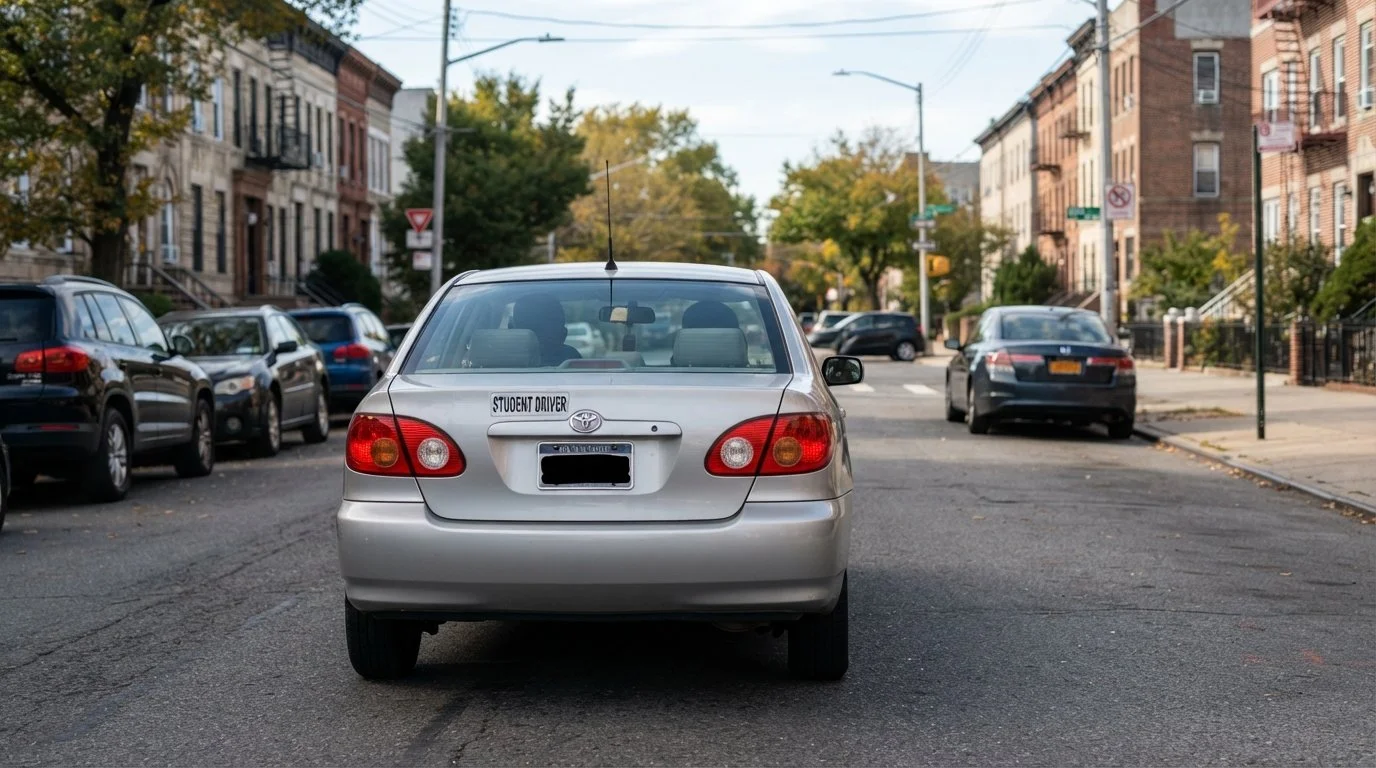
Mock Test vs. Real Exam: What Actually Happens During a Mock Test?
Preparing for your road test can feel like walking into an arena blindfolded. You know you’ve practiced parallel parking, checked your mirrors a thousand times, and tried to stay calm at busy intersections. Yet, as your test date approaches, the same questions keep repeating in your head: What will the examiner actually look for? How strict are they? What happens if I make a minor mistake?
At VMARE Driving School, we believe the best way to conquer test anxiety is to eliminate the unknown. That’s why our mock driving test is designed to mirror the exact conditions, scoring standards, and high-pressure environment of the official road exam.
Here is a complete, step-by-step walkthrough of what actually happens during a VMARE mock test, how our instructors evaluate your driving, and why taking a dry run is the smartest shortcut to getting your license on the first try.
What Is a Mock Test?
A mock driving test isn’t just another practice lesson where an instructor offers friendly pointers along the way. It is a full simulation of your official road exam.
During a mock test, your VMARE instructor steps into the role of a certified test examiner. They will sit beside you with a standardized scoring sheet, remaining professional, calm, and neutral. There will be no step-by-step guidance or instant corrections during the drive—just clear navigation instructions and real-time grading, exactly like the official test day.
The Pre-Drive Inspection & Safety Check
Before you even put the car in drive, the evaluation begins. Just like a real exam examiner, your instructor will conduct a thorough pre-drive check to ensure you understand your vehicle’s key safety controls.
You will be evaluated on your ability to quickly and accurately locate or demonstrate:
Turn Signals & Hazard Lights: Testing full function and response.
Horn & Brake Lights: Verifying operational safety.
Windshield Wipers & Defroster: Demonstrating control during poor visibility conditions.
Hand Signals: Showing standard manual directional signals through the driver window.
Mirror Adjustments: Ensuring proper alignment of rearview and side mirrors before starting the engine.
Instructor’s Tip: Fumbling with controls during the pre-drive check sets a nervous tone for the rest of the exam. Mastering these basics demonstrates immediate confidence before you hit the road.
Precision Maneuvers & Parking Skills
Once you clear the vehicle inspection, your instructor will direct you to an area designated for technical driving maneuvers. This section tests your spatial awareness, vehicle control, and mirror/blind-spot checks.
1. Parallel Parking
Your instructor will evaluate your approach, alignment, and reverse entry between test cones or marked vehicles.
What We Grade: Checking blind spots twice before backing up, maintaining a safe distance from the curb (usually within 12 inches), smooth steering control, and avoiding hitting the curb or boundary markers.
2. Three-Point Turn (K-Turn)
Executing a turn in a confined space requires deliberate control and maximum observation.
What We Grade: Signaling before stopping and turning, performing full shoulder checks before changing direction, and completing the turn smoothly without running onto the curb.
3. Reversing in a Straight Line
You will be asked to back up in a straight line along a curb for approximately 30 to 50 feet.
What We Grade: Looking over your right shoulder through the rear window (not relying solely on cameras or mirrors), keeping the vehicle parallel to the curb, and maintaining a steady, slow speed.
Lane Changes & Residential Driving
Next, the route transitions into local residential and commercial streets. Here, the instructor grades your adherence to fundamental traffic laws and smooth vehicle control.
Multi-Lane Positioning & Lane Changes
Changing lanes sounds simple, but it is one of the most common areas where students lose points on the official exam.
The Evaluation Standard: Your instructor will watch for the strict sequence: Signal → Check Mirrors → Shoulder Check Blind Spot → Execute. Smooth acceleration during the lane transition is required—slowing down unexpectedly while changing lanes creates a safety hazard.
Intersections & Right-of-Way
Complete Stops: Coming to a complete rest behind the stop line or crosswalk line, not rolling through.
Observation: Performing left-center-right visual sweeps before entering an intersection.
Speed Management: Maintaining the posted speed limit without driving dangerously fast or overly slow out of hesitation.
Highway & Higher-Speed Driving
Depending on your local licensing requirements, your mock test route may include higher-speed arterial roads or highway merging.
Merging Technique: Matching the speed of traffic on the acceleration ramp before merging seamlessly without forcing oncoming vehicles to brake.
Safe Following Distance: Maintaining a minimum 3-to-4-second cushion behind the vehicle ahead.
Scanning & Mirrors: Checking rearview and side mirrors every 5 to 8 seconds to maintain 360-degree situational awareness.
The Post-Test Debrief & Scorecard Analysis
When you return to the training center or starting location, your instructor steps out of "examiner mode" and back into "coach mode."
Instead of leaving you guessing, you’ll receive a detailed performance scorecard detailing:
Passed Requirements: Every maneuver and rule you executed flawlessly.
Point Deductions: Minor mistakes (e.g., stopping slightly over a crosswalk line or forgetting a secondary blind-spot check).
Critical Errors: Identification of any immediate disqualification items (such as running a red light, mounting a curb, or requiring instructor intervention).
You'll get an exact numerical score showing whether you would have passed or failed the real exam that day, along with a targeted action plan to fix your specific weak spots before your actual test.
Ready to Pass Your Driving Exam with Confidence?
Don't let test-day nerves stand between you and your driver's license. A VMARE mock driving test gives you the exact experience of the real exam—without the risk of failing on your permanent record.
Book your VMARE Mock Test & Evaluation Session today and take the wheel with 100% confidence on test day!
