
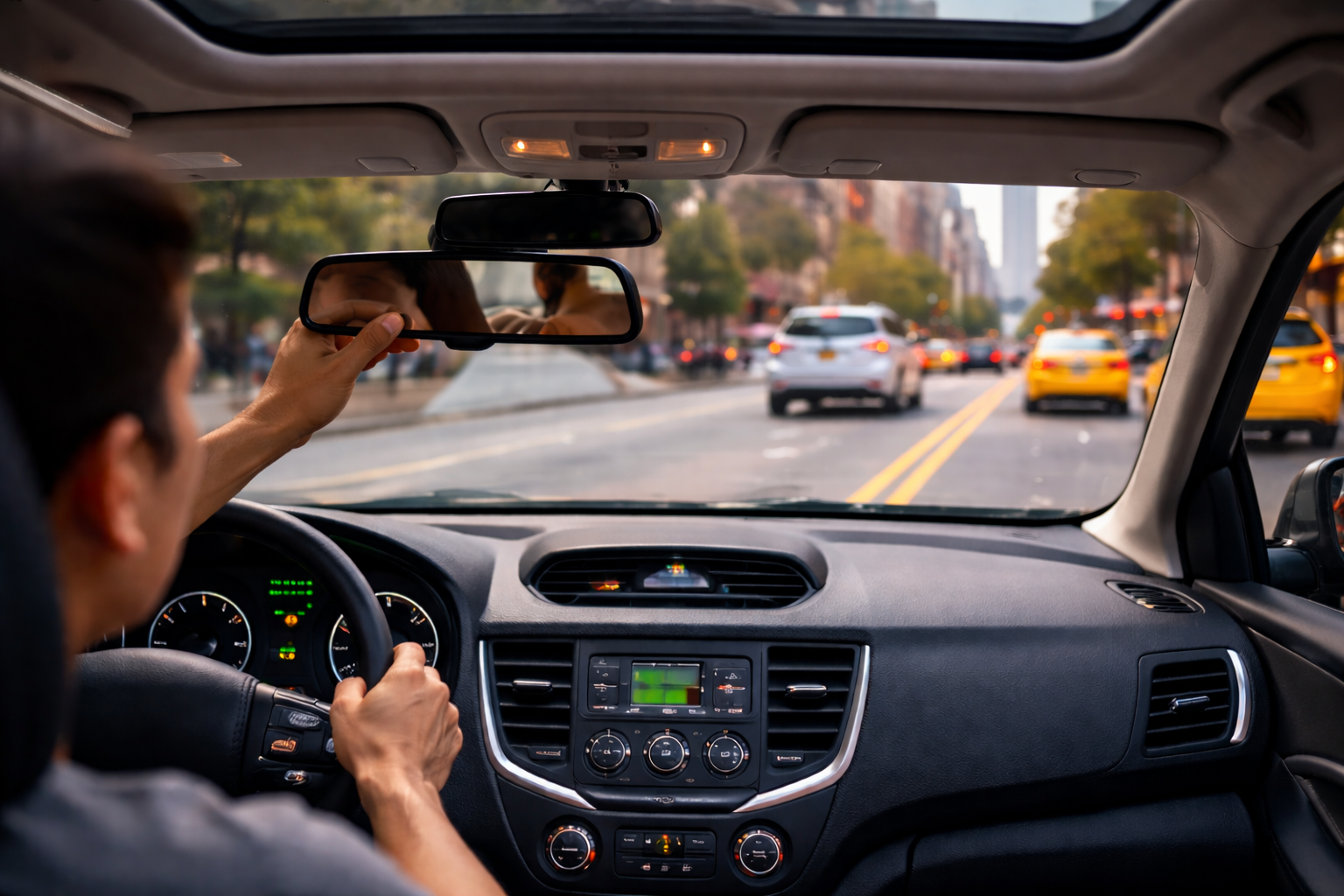
If you’ve been practicing turns, parallel parking, and lane changes, you’re already doing the hard part. But a surprising number of NYC road test point losses happen before the car even moves.
Examiners may ask “show-me” checks (or quietly watch you do them) to confirm you can operate key controls safely. That means seat position, mirrors, lights, signals, horn, parking brake, and a few basics that prove you’re ready to drive.
This guide gives you a simple, step-by-step NYC pre-drive checklist you can follow every time—so it becomes automatic on test day.
Why the Pre-Drive Checklist Matters on the NYC Road Test
NYC examiners want to see three things immediately:
Safety habits (seatbelt, mirrors, awareness)
Control familiarity (signals, lights, horn)
Calm, organized behavior (not rushing, not guessing)
Even if you don’t get asked direct “show-me” questions, they’re still observing whether you:
adjust properly,
check your surroundings,
and start smoothly without confusion.
Think of this as your “opening statement” to the examiner: I’m prepared.
The Full “Show-Me” Pre-Drive Checklist (Do This in Order)
1) Seat Position (First)
Before touching mirrors, set your seat. A good seat position makes everything else easier.
Do this:
Sit upright with your shoulders against the seat
Adjust distance so your foot can press the brake fully without locking your knee
Adjust seat height so you can see clearly over the hood and dashboard
Set headrest mid-head level (basic safety)
Common student mistake: sitting too far back → poor brake control and weak steering.
2) Steering Wheel Position (If Adjustable)
Not every car has this, but if it does:
Do this:
Set the wheel so your arms are slightly bent
Make sure the wheel doesn’t block your view of the dash
Pro tip: You should be able to turn smoothly without reaching.
3) Mirrors (Rearview First, Then Side Mirrors)
Your mirrors are one of the easiest places to lose points if you forget them.
Rearview mirror:
Center the view behind you
Side mirrors:
Angle them so you just barely see the side of your car
The rest should show the lane next to you, not your door
Common mistake: students aim side mirrors too far inward, creating blind spots.
4) Seatbelt (Before You Start the Car Moving)
This is non-negotiable.
Do this:
Buckle up before shifting into gear
Make sure the belt is flat and snug across your chest and lap
If you’re nervous, take one breath after buckling—then continue calmly.
5) Parking Brake (Confirm It’s Engaged Before You Shift)
Some cars have a hand brake, others have a foot brake or electronic brake.
Do this:
Confirm it’s set while you’re still parked
When ready to move, release it smoothly (don’t “pop” it)
Common mistake: forgetting to release the parking brake → rough start, confusion, and a bad first impression.
6) Lights: Know Where They Are (Even in Daytime)
Examiners may ask you to show headlights, high beams, or hazards.
Be ready to demonstrate:
Headlights (on/off)
High beams (how to activate)
Hazard lights (triangle button)
Turn signals (left/right)
NYC reality: Even if it’s bright outside, you must still know how to operate them quickly.
7) Turn Signals: Confirm They Click and Cancel
Signals are one of the most watched behaviors during the test.
Do this:
Signal left, then right (briefly) to confirm they work
Make sure you know how to cancel if it stays on
Common mistake: students forget the signal is still blinking after a turn—examiners notice.
8) Horn: Quick Tap Only
You may be asked to show the horn.
Do this:
One quick tap (don’t lean on it)
Pro tip: Know exactly where to press (center of wheel, side button, etc.).
9) Windshield Wipers + Washer Fluid (If Asked)
Not always tested, but it comes up.
Do this:
Show how to turn wipers on/off
Show how to spray washer fluid
This is especially common if the weather is bad or visibility is part of the discussion.
10) Gear Selection: Park → Drive, and Reverse Awareness
Before moving, confirm you understand the gear positions.
Do this:
Keep foot firmly on the brake
Shift from Park to Drive smoothly
If asked about Reverse, explain you keep brake pressed and check behind
Common mistake: shifting too quickly without stable braking control.
“Show-Me” Questions You Should Be Ready For
On the NYC road test, you may hear questions like:
“Show me your turn signals.”
“Show me your headlights.”
“Show me the hazard lights.”
“Show me the horn.”
“Show me the parking brake.”
“Show me how you would defrost the windshield.” (in some cases)
You don’t need to talk a lot—just demonstrate confidently.
If you’re unsure in the moment, don’t guess fast. It’s better to pause and say:
“One moment—I want to make sure I do that correctly.”
Calm beats chaotic.
The 15-Second Routine That Helps With Test-Day Nerves
Right before you start moving:
Look left-right-left
Check mirrors
Signal
Release parking brake
Move slowly
This micro-routine prevents “rushed starts,” which often cause early mistakes.
Practice This Checklist Like a Skill (Not a Reading Assignment)
The biggest difference between students who pass and fail is this:
Passing students don’t remember the checklist—they repeat it until it’s automatic.
Do it at the start of every practice session, even if it feels repetitive. On test day, your hands will follow the habit.
Book a VMARE Driving Lesson Today
Want to make sure you’re doing the NYC pre-drive checklist exactly the way examiners expect?
At VMARE, we help students:
Build a perfect pre-drive routine
Practice “show-me” checks until they’re automatic
Fix small habits before they cost points
Prepare for the NYC road test with confidence
👉 Book a VMARE driving lesson today and get road-test ready faster—without the guesswork.
